Medical Device Sales Resume: How to Write One With No Experience
Short answer: A medical device sales resume should read like a rep already wrote it. Lead with a one-line summary built around your best measurable win (not an objective), put a number in most bullets, use sales language like quota, territory, pipeline and accounts, and keep it to one clean page. Then pair every application with a direct message to the hiring manager.
Recruiters give the top third of your resume about seven seconds. After 20+ years in medical device sales and plenty of time on the hiring side, these are the fixes that make the biggest difference for career changers.
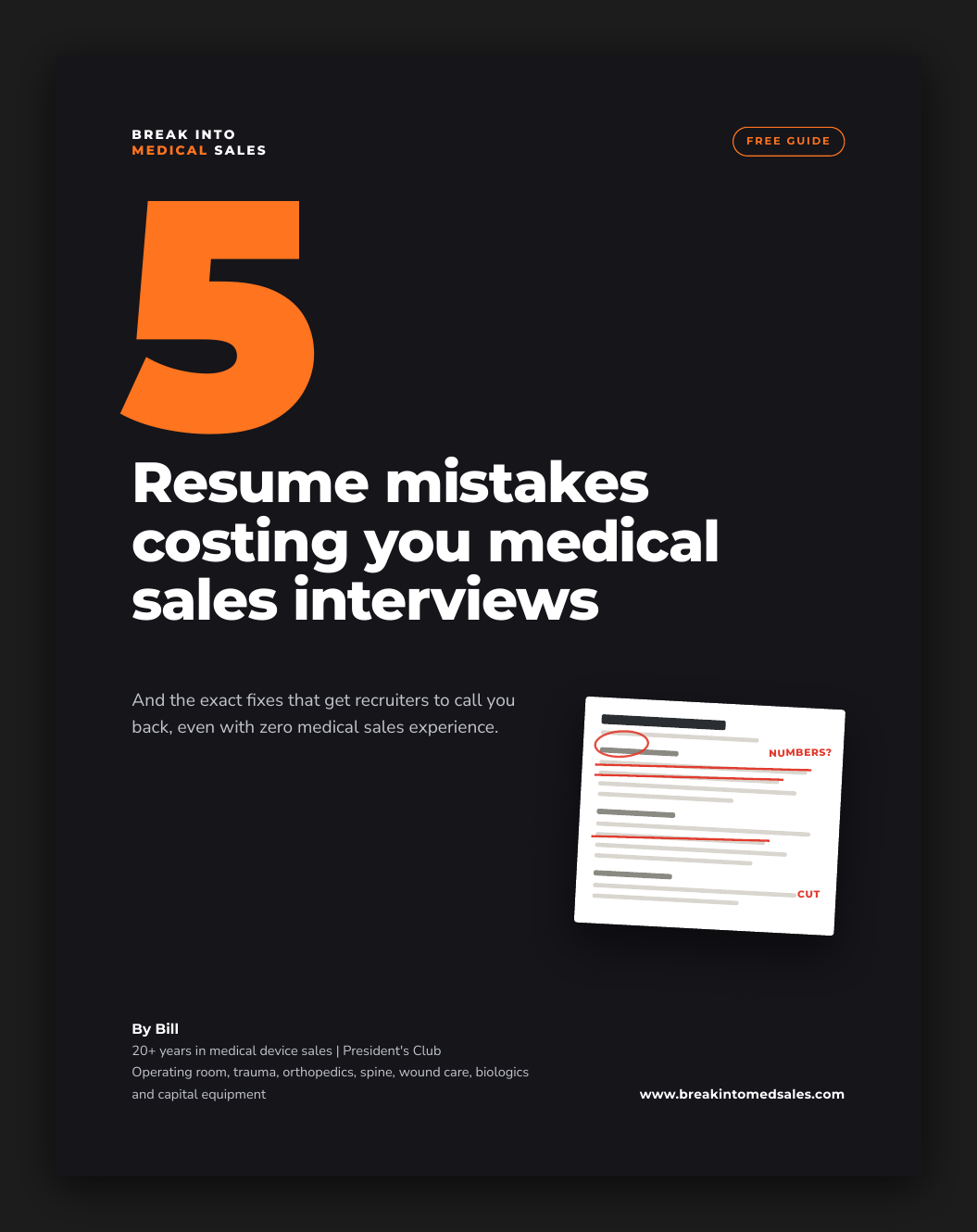
Free guide: 5 resume mistakes costing you medical sales interviews, with the exact fixes. Get the free resume guide
What do hiring managers look for on a medical sales resume?
They skim, compare and flag people who look like reps. They are not hunting for years of medical experience. They are asking one question: can this person sell, learn fast and represent our brand? Your resume should answer yes in seconds:
- Action verbs and measurable results
- Sales language, even if your title was not "sales"
- A clean, modern, one-page layout
- A summary that makes your intent obvious
Mistake 1: Your resume doesn't speak medical sales
If it reads like a generic retail or admin resume, recruiters move on. Translate whatever you did into selling: targets hit, revenue grown, relationships built, problems solved.
- Before: Responsible for customer service and daily store operations.
- After: Grew store revenue 18% year over year and ranked #2 of 40 locations by beating quota 9 of 12 months.
Mistake 2: No numbers, no proof
Medical sales is a numbers job. Vague duties say nothing about whether you can carry a quota.
- Before: Helped increase sales and improve customer satisfaction.
- After: Increased territory sales 32% in 12 months and lifted customer retention from 71% to 89%.
Aim for a number in at least 70% of your bullets: percentages, dollars, rankings, counts. No exact figures? Use honest estimates you can defend in an interview.
Mistake 3: Your best wins are buried
Career changers often hide their strongest proof at the bottom, or cut it because it does not feel "medical" enough. Resilience, relationships and beating quota carry over from almost any field.
- Before: Objective: Seeking an entry-level position in medical sales to grow my career.
- After: B2B closer who beat quota 6 years running, now bringing that track record into medical device sales.
Drop the objective line. Replace it with a summary that leads with your strongest, most relevant win.
Mistake 4: Too long, too cluttered
Three pages of dense text and jobs from 15 years ago work against you. Keep one page (two at most if you have 10+ years of directly relevant results), 3-5 tight bullets per recent role, older jobs cut to a single line, and enough white space to scan easily.
Mistake 5: You apply, then disappear
Most people submit online and wait. The candidates who land interviews also reach out directly to the hiring manager or a rep on the team the same day, which is exactly what a good rep would do. Short template:
"Hi [Name], I just applied for the [role] on your team and wanted to reach out directly. I'm moving into medical device sales from [your field], where I [one specific win]. Would you have 10 minutes to share what separates your top reps? Either way, thanks for your time."
Resume examples by background
Here is how common backgrounds translate into medical sales language:
- Server or bartender: "Managed 100+ weekly guests in a high-volume environment. Upsold premium items, resolved service issues in real time and consistently earned top-tier guest satisfaction scores."
- Teacher: "Created structured learning plans, communicated with 30+ parents weekly and led student performance improvement strategies requiring communication, persuasion and data tracking."
- College athlete: Lead with captaincies, stats, and GPA while competing. Coaches and recruiters read those as coachability and work ethic.
- Military veteran: Translate rank and duties into team size led, equipment or budget managed, and measurable outcomes like "zero losses" or "100% mission readiness."
- Healthcare worker: Highlight OR or clinical exposure, procedure knowledge and how you trained or educated others.
Keywords to include
Many resumes are screened by applicant tracking systems. Mirror the job posting and include words like: territory, quota, pipeline, account management, cold calling, relationship building, CRM (Salesforce, HubSpot), physician relationships, presentations and cross-functional collaboration.
The right format
- One page, PDF, clean font, no headshot
- Summary: one or two lines leading with your best win and your move into medical sales
- Experience: reverse order, each role led by its best result
- Education
- Skills and certifications: list any sales or medical terminology training, even free courses
Your LinkedIn should match: a headline that signals intent, an About section that tells your why, and experience written as outcomes.
Get the free resume guide
Your resume is the first thing standing between you and an interview. Our free guide shows the 5 resume mistakes that cost career changers medical sales interviews, with real before and after examples and a message template that gets hiring managers to reply.
Download the free resume guide
Ready for the full plan? The Medical Sales Starter Kit includes the step-by-step guide, interview Q&A cheat sheet, cold outreach templates, resume template and job tracker.
Frequently asked questions
Should I put an objective on a medical sales resume?
No. Replace it with a short summary that leads with your strongest measurable result and your move into medical sales.
How long should a medical device sales resume be?
One page for most career changers. Two pages only if you have 10+ years of directly relevant results.
What if I don't have sales numbers?
Use any numbers you can defend: customers served, team size, rankings, percentages improved, money saved, goals hit. Honest estimates are fine if you can explain them in an interview.
Should I include a photo on my resume?
No. Keep the photo on LinkedIn, where it belongs.
What skills should I list for medical sales?
CRM tools, presentations, relationship building, territory or account management, and any medical terminology or sales training you have completed.
Next step: How to get into medical sales with no experience.
FREE RESUME GUIDE
5 resume mistakes costing you medical sales interviews, with real before and after fixes and a message template that gets hiring managers to reply.
Ready for the full plan? The Medical Sales Starter Kit has the step-by-step guide, interview cheat sheet, outreach templates and job tracker. See the kit
Break Into Medical Sales
Step-by-step guides and tools for career changers breaking into medical sales - built from 20+ years in medical device sales.
Quick links
Free resume guide
5 resume mistakes costing you medical sales interviews, and how to fix them.
Created with © systeme.io